Station supply
Deploy a fleet of Voltara stations across high-footfall locations with a consistent branded experience.
 Apply as partner
Build with Voltara
Launch Voltara in your city, region, venue group, or event portfolio with branded stations, operating guidance, and a proven rental model.
Partner model
Deploy a fleet of Voltara stations across high-footfall locations with a consistent branded experience.
Use monitoring, rental flows, pricing guidance, and support processes designed for shared charging.
Pitch venues with clear benefits, setup options, and a simple path to recurring local revenue.
Choose your path
Use these ranges as planning examples for a Voltara-style launch. Final pricing, station count, territory rights, and commercial terms should be confirmed in your partner agreement.
Network Partner
Best for side-hustle operators, venue owners, event suppliers, and entrepreneurs who can place stations in strong local locations.
Market Operator
Best for operators who want territory growth, more hands-on support, larger station deployment, and a serious local charging business.
What the network includes
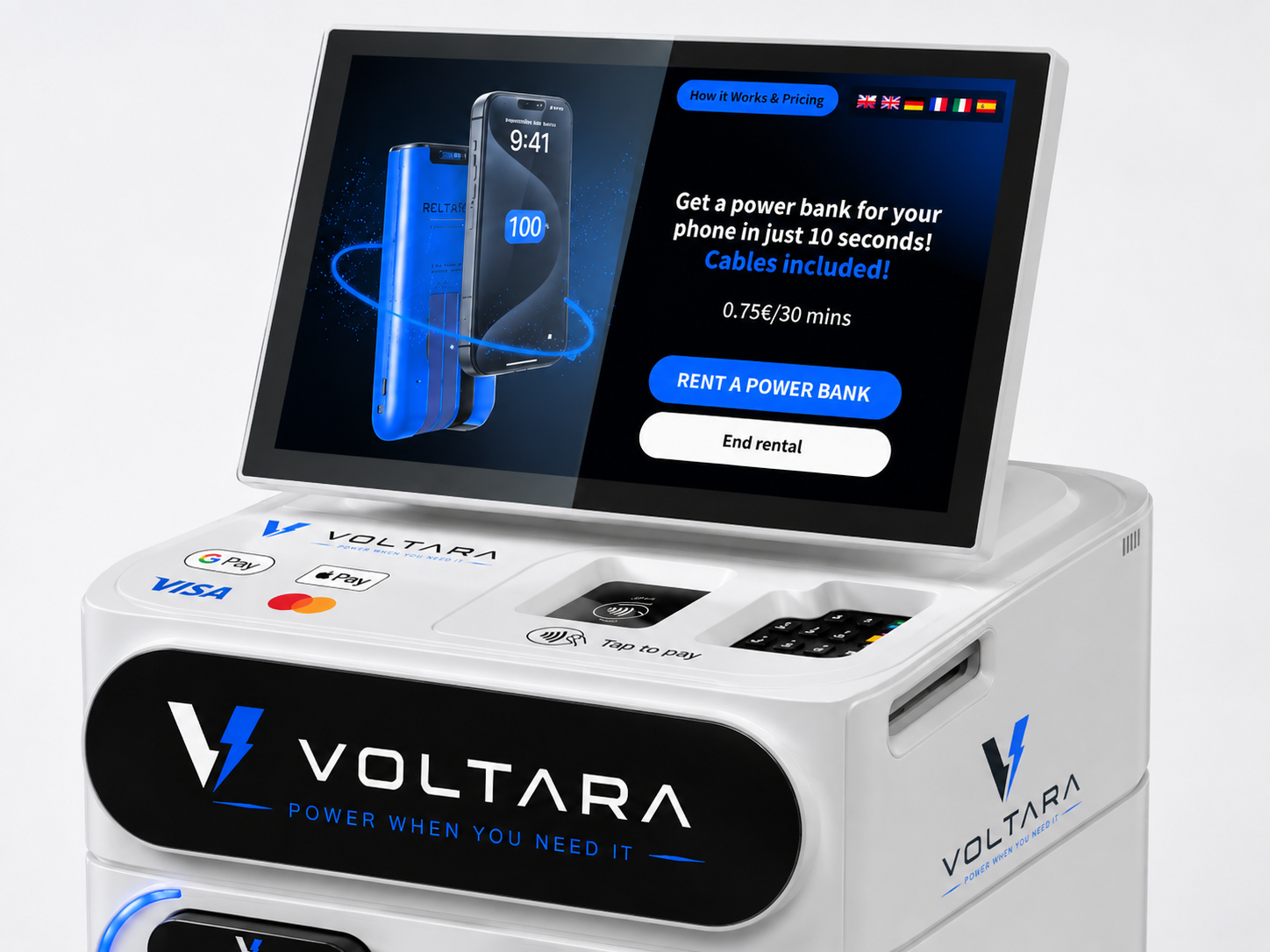
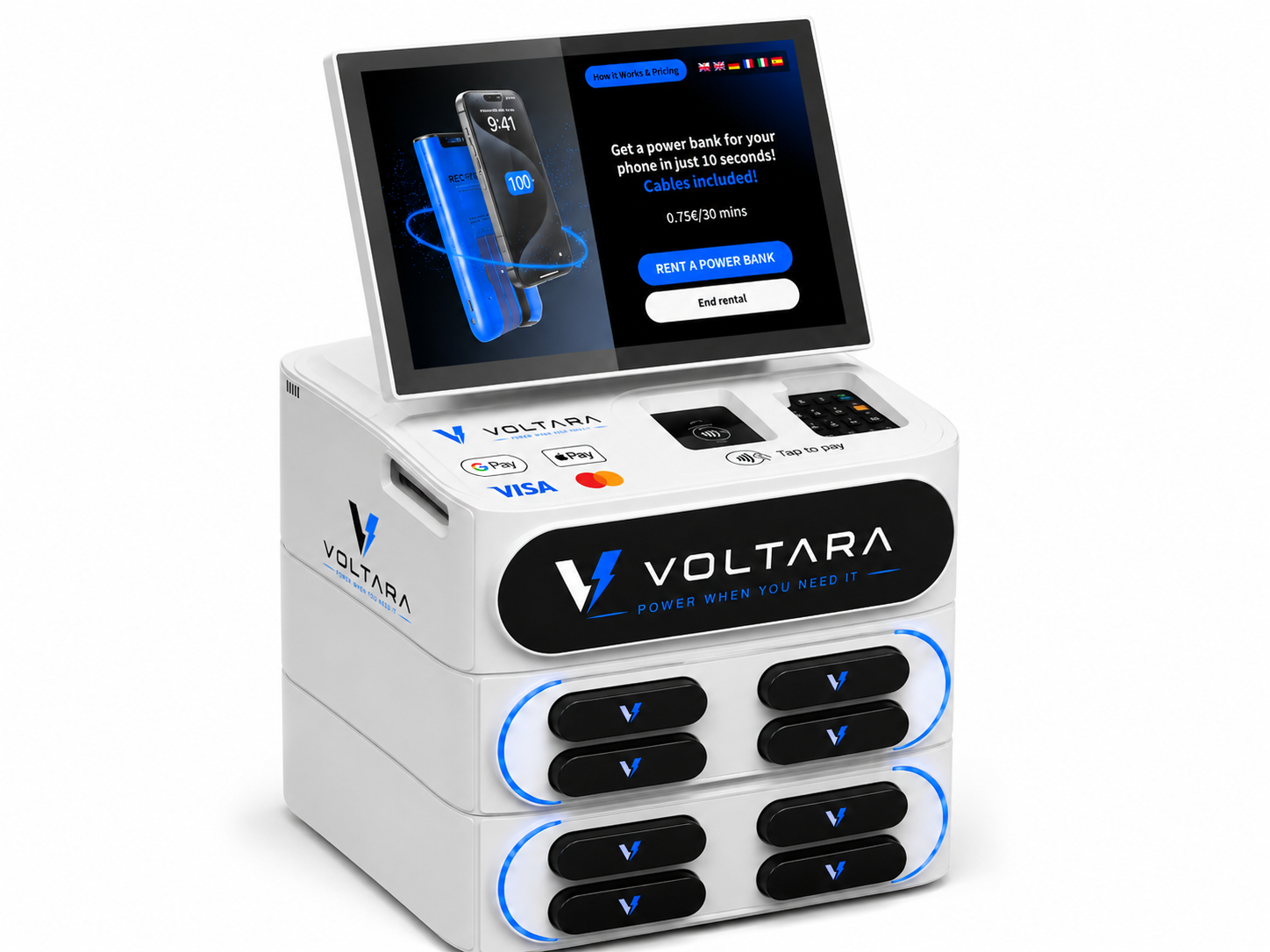
Deploy branded stations with touchscreen rental flow, integrated card payment, visible lighting, and power banks with cables included.
Track station placements, rentals, return behaviour, and performance patterns so you can move underperforming stations and double down on winners.
Use local pricing such as 30-minute, hourly, or daily-cap rentals. Strong venues can justify premium pricing because battery anxiety is immediate.
Use simple talking points around guest experience, staff time saved, dwell time, and low-effort hosting to win venues faster.
Start with high-footfall placements, test demand, review usage data, then expand station density around the venues that perform.
Plan for onboarding, station setup, troubleshooting, software updates, spare parts, and operating guidance as the network grows.
Partner economics
Voltara partners keep 80% of rental revenue. Voltara takes a 20% platform and network cut to support the technology, brand, setup guidance, and ongoing partner infrastructure.
The majority of every rental stays with the local partner running and growing the network.
Our share supports the system behind the stations, partner tooling, brand, and network support.
Comparable shared-powerbank networks describe most partner break-even windows around 6-12 months, with premium placements able to pay back faster.
Payback depends on station cost, rental pricing, footfall, venue quality, payment fees, seasonality, and how actively underperforming units are relocated.
Investment and returns
Revenue depends on station cost, local pricing, venue quality, usage, payment fees, partner terms, and how actively you manage placements. Treat the numbers below as a planning guide, not a guarantee.
Most shared-powerbank models are funded by buying stations first. You should also keep a launch budget for signage, transport, occasional replacements, and local marketing.
Healthy venues may reach payback within 6-12 months. Exceptional sites can be quicker; weaker sites can take longer or need relocation.
Plan for payment processing, SIM/connectivity, platform/support fees if applicable, local sales time, and maintenance. Power consumption is typically low for this category.
Launch timeline
We confirm the launch area, partner fit, station count, company details, and your access to high-quality venue opportunities.
Choose the partner route, budget, pricing assumptions, operating plan, and the first venues to target.
Stations are ordered, configured, branded, and prepared with the rental/payment flow needed for launch.
Place stations in the first venues, monitor early usage, improve placement, and start expanding into similar locations.
Partner detail pages
Building from scratch means sourcing hardware, developing software, handling payments, designing the rental flow, supporting users, managing firmware, and proving venue demand. Voltara gives partners a ready-to-launch structure so their energy goes into placement, sales, and growth.
Start where people stay long enough to need extra battery and where phones are essential: nightclubs, bars, hotels, festivals, casinos, arenas, universities, malls, gyms, and tourist-heavy locations. Avoid low-dwell spaces until you have stronger data.
Partners earn from paid rentals. The strongest results usually come from dense clusters of good venues, clear pricing, strong visibility, and quick relocation when a station is not performing.
Not always. Many venues value the guest experience and staff time saved. For premium or competitive locations, a small venue incentive can help secure placement if the expected usage supports it.
Do not buy for low-traffic locations, hide stations away from the main flow, ignore rental data, or wait too long to move weak placements. The network improves when you treat every station as a measurable asset.
Yes, especially at Network Partner scale. The most time-intensive parts are venue sales, launch setup, and the first round of optimisation. Once stations are live, most work becomes monitoring, support, and relationship management.
Partner signup
Share where you want to launch and the kind of sites you can access.